Welcome to the second part of the 6th webinar of Smart Talks with Jovan. Our guests were:
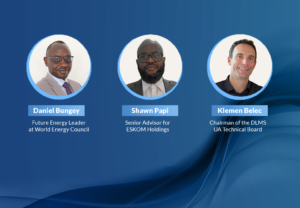
Mr. Daniel Bungey, Future Energy Leader at World Energy Council and a past recipient of the Young Energy Professional Award (Sub-Saharan Africa) from the AEE, Mr. Shawn Pappi, a Senior Advisor for ESKOM Holdings, and Mr. Klemen Belec, a Chairman of the DLMS UA Technical Board.
If you haven’t read the first part, we recommend checking it out before coming back to this one. Read it here.
How can African utilities find a balance between regulatory standardization and fostering innovation to deploy cost-effective, customer-friendly smart metering solutions, particularly in rural areas?
Bungey:
I think it ties back to the earlier point about the need for regulatory regimes and standards to strike the right balance between functionality and cost while addressing the unique challenges of underserved or unserved areas in Africa. Utilities, particularly central ones, often have a strong connection to government and can influence policy. Their focus should be on providing clear and specific requirements that address critical functionalities without overburdening the system with unnecessary demands.
It’s important for utilities to remain open to innovation and prioritize what needs to be addressed—whether it’s billing data, consumption data, customer privacy, or other functionalities. This openness ensures that private sector players and meter designers have the flexibility to develop solutions that meet these needs in a cost-effective manner, ultimately keeping meter costs low.
For instance, when utilities draft tenders for meters in remote areas, the use cases are often basic. In such areas, where connectivity and physical infrastructure access are already limited, it may not make sense to require advanced features like home area network capabilities. Tailoring devices to the practical needs of these regions is crucial to ensuring that resources are utilized effectively.
This careful consideration of features, paired with flexibility and innovation, is key for both private and public utilities. It enables them to address the unique challenges of these areas without inflating costs or complicating deployments.
Pappi:
Maintaining a balance between standardization and innovation is crucial. Standards should function as common building blocks—like Lego pieces—that allow for flexibility in creating tailored solutions. These blocks should enable the development of either large-scale or smaller, more focused implementations, depending on the specific needs of a region or customer base.
Standards must be generic enough to facilitate any solution without stifling innovation. Innovation, in turn, will emerge from the unique needs encountered in diverse environments, such as rural Africa, urban areas, or even developed regions like Europe and the U.S., which present vastly different challenges and opportunities.
The key question to ask is: what needs are we trying to address? Once those requirements are defined, the standard’s building blocks can be adapted to implement the desired solution. This approach allows for a sophisticated device in one high-end area while simultaneously supporting a more basic implementation within the same country, all governed by the same rules and communication infrastructure to ensure system compatibility.
For rural and urban customers, the requirements will differ significantly. In rural areas, for instance, metering solutions should leverage existing communication media rather than introducing new ones. By tapping into available resources, innovative and cost-effective solutions can be created to meet the specific needs of those spaces.
Strong standardization, combined with clear and well-defined requirements, is essential for innovation to thrive. Additionally, the presence of robust regulations ensures the adoption of common standards. This synergy between regulation and standardization is key to reducing the cost of deploying smart metering technology in an innovative and efficient manner.
Belec:
A practical example underscores Shawn’s point about the importance of standards in smart metering. In densely populated urban areas, adherence to grid standards is non-negotiable. This ensures interoperability, enabling utilities to replace or upgrade components easily if a vendor discontinues support or if a product fails during the meter’s operational lifespan. Without this standardization, long-term support and adaptability become significant challenges.
In rural areas, particularly off-grid systems, there’s room for more innovation and flexibility. Here, proprietary solutions might connect components like PV systems, batteries, smart meters, and diesel generators to create closed systems, especially in regions unlikely to connect to the grid for extended periods. However, utilities must still prioritize long-term reliability.
Even in these innovative setups, utilities must ensure access to spare parts and maintenance for at least five years of operation. This prevents scenarios where a system is built and operated for a few years, only to fail due to a lack of support or replacement components. Such failures, which have occurred before, disrupt energy supply and negate the benefits of the initial investment. Proper planning and assurances for ongoing support are essential to avoid these issues.
How can financial and technical partnerships help in advancing smart metering projects across Africa?
Pappi:
I think finance plays a crucial role as a significant enabler because you need to pay for the engineering and the products being implemented. It’s an essential aspect of every solution we aim to build and something that must always be carefully considered. If we look at adopting standard solutions and achieving agreements across the continent, it becomes easier to attract investment for these initiatives.
When it comes to technical partnerships, I’ve observed over the years how many technologies have been developed primarily through collaboration. Whether it’s GSM technology, Bluetooth, or other innovations, the key driver behind their growth into de facto standards was collaboration. Therefore, where possible, we should focus on building partnerships, especially with those who have already navigated the challenges we are trying to address from a technical perspective.
These partnerships are vital in developing technology and creating strong business cases that make it easier to secure financing for various projects. Unfortunately, I don’t have a specific example to share right now, but perhaps my colleagues can provide one.
Belec:
I agree with what Shawn mentioned. Financing can come from global banks, local banks, vendors, or investment funds from other regions. This is often the driving force behind initiating smart metering rollouts, and there’s nothing new about this approach.
Regarding specification and product design, one lesson learned in the European Union is that countries trying to define highly customized specifications on their own often face challenges later. For instance, taking DLMS as a base but adding numerous customized features without considering what’s happening in neighboring countries has proven problematic. These countries now struggle with economies of scale and often need to revert to the base standard. Vendors may not always support specific customizations in every market, as it may lead to a dead end, especially given the fast pace of development in the electrical energy segment, including distributed energy resources.
Standards are evolving rapidly, even in Europe. Currently, under the European Union umbrella, new standards are being developed to define communication and data exchange for flexibility and demand response purposes.
My advice would be to work closely with vendors, as they have a global perspective from working in multiple countries. Additionally, collaborating with multiple vendors is wise, as relying on one vendor might lead to biased decisions. This approach helps in achieving the right and cost-effective specifications.
Bungey:
Emphasizing the need for financial support mechanisms is critical, especially for utilities in Africa, to advance smart metering initiatives. The majority of African utilities struggle to recover operational expenditures, heavily relying on government subsidies and loans from various development partners. Addressing these challenges could involve adopting proven approaches, such as results-based financing models that have been effective in addressing energy access. Exploring partnerships with vendors and suppliers is also essential, as Klemen highlighted.
A notable example, though not perfect, is the Meter Asset Provider (MAP) model in Nigeria. In this approach, utilities collaborate with private companies to finance and install smart meters. These companies recover their costs through operational expenditure savings on a tariff basis. Such models offer utilities the flexibility to manage their stretched balance sheets, which often struggle to support even existing infrastructure, let alone enable technological expansion.
Innovative collaborations like this can help utilities overcome financial barriers and ensure the integration of smart metering technologies while maintaining a focus on operational efficiency and reliable power provision.
What impact do you think connected smart meters could have on energy access and affordability in African communities?
Belec:
The impact of smart metering projects extends beyond energy access; it influences the entire economy. Globally, electricity has become a major driver for improving living standards within a country. Implementing smart metering systems introduces rules, structure, and transparency in energy consumption. For instance, in regions where energy fraud and theft pose significant challenges, smart meters equipped with advanced fraud detection features can foster fairness within communities. These meters can identify those stealing energy while recognizing and supporting those who pay for their consumption.
From a technological standpoint, the type of meter—whether it’s a prepaid connected meter, a European-style smart meter, or a postpaid meter—is less critical. The key lies in having a robust system with the right functions and features to operate efficiently.
Additionally, smart metering projects should be seen as infrastructure investments that inherently boost the economy. By strengthening infrastructure, countries can enhance living standards, drive economic growth, and create a more structured and transparent energy sector. In this way, smart metering serves as a cornerstone for broader development and progress.
Bungey:
Smart metering presents a significant opportunity to enhance energy access, particularly in rural areas of Africa, where access rates remain low, and providing power is costly for utilities. In these regions, the key challenge often revolves around the cost of delivering power. Smart metering addresses this by enabling more efficient cost recovery for generated power, making energy access both feasible and sustainable.
A prime example is the integration of prepay systems with mobile money solutions, such as Kenya Power’s use of M-Pesa. This approach allows utilities to supply meters at no upfront cost to consumers, recovering the cost gradually through tariffs. Such systems not only provide flexibility in payment but also reduce financial pressure on consumers, aligning with the affordability needs in these areas.
For utilities, smart metering ensures cost recovery while reducing commercial and technical losses. This financial stability enables reinvestment in existing infrastructure and facilitates further expansion, thereby increasing power availability for more communities. Additionally, the private sector benefits from the assurance that smart metering provides in terms of payment security, encouraging investments in power distribution.
Smart meters also support innovative deployment models, such as load-limiting features, which allow for the creation of small grids capable of serving multiple households efficiently. This approach minimizes upfront investment costs while maximizing the reach of power distribution.
Overall, smart metering offers a versatile and impactful solution for expanding energy access in underserved regions, balancing costs, enhancing payment flexibility, and supporting both utility providers and private sector initiatives.
Pappi:
Daniel raised some very important points. Smart metering as a technology provides greater visualization into networks, which can significantly improve the operational efficiency of utilities. This enhanced efficiency has the potential to reduce the costs associated with running these utilities. In turn, this cost reduction could benefit end customers by making the provision of services cheaper, which might eventually be reflected in more affordable tariffs.
Currently, many tariffs do not accurately reflect the actual cost of energy. This isn’t due to any deliberate mismanagement but rather a lack of sufficient data at the customer level to monitor energy consumption effectively. With the deployment of smart meters, utilities can gain a clearer picture of consumption patterns, allowing for a more accurate correlation between energy usage and the costs of generation and delivery.
As Klemen mentioned earlier, smart metering is inherently an infrastructure project, offering opportunities to expand grids and increase energy access. Additionally, operational efficiency gains from smart meters can help utilities lower their costs, which, over time, could translate into financial benefits for customers.
By addressing inefficiencies and providing better data insights, smart meters pave the way for a more transparent, cost-effective, and customer-focused energy system.
Conclusion:
Utilities must strike a balance between adhering to regulatory standards and fostering innovation. Standardization ensures interoperability and long-term reliability, while innovation enables tailored solutions for specific regions, particularly rural areas with unique challenges.
Effective partnerships with governments, vendors, and private sector players are crucial for advancing smart metering projects. Utilities should maintain clear and flexible requirements that allow meter designers to innovate while ensuring system affordability and scalability.
Smart metering technology enhances the operational efficiency of utilities by providing better network visualization and detailed consumption data, enabling more accurate cost-reflective tariffs. This infrastructure investment not only reduces utility costs but also expands energy access and supports a more transparent and customer-focused energy system, ultimately leading to more affordable and equitable energy services for end users.