
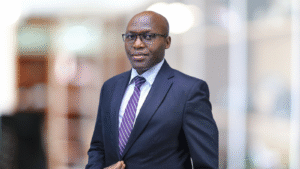
In this interview, we speak with Jeremiah Kiplagat, Director at the Kenya Power Institute of Energy Studies and Research, about how utility transformation in Kenya is being driven by a focus on human capital, innovation, and smart grid deployment.
In this second part of our interview we turn to the financial and practical realities of Kenya’s smart energy transition. While the first part explored innovation, and the early steps toward digitalisation, this section focuses on how smart metering projects are funded and the main challenges Kenya faces in implementation.
Is there a need for a large-scale rollout of smart meters? And how is funding secured for such projects—through government budgets, public-private partnerships, or international financial institutions like the African Development Bank and the World Bank?
Moving to smart meters is essential. They allow us to interact better with customers, monitor usage patterns, and most importantly, address losses. Loss reduction is critical. We have a roadmap to bring losses down to single digits, and smart meters are central to that plan.
Funding, however, remains a challenge. For new connections, government support is significant, often in the form of loans on our behalf, particularly for last-mile connectivity. Commercial customers usually finance their own connections. For smart meters, large-scale rollout would require a clear roadmap around sustainability, communication costs, and technology choices.
In the past, we deployed about 60,000 smart meters and a meter management system through World Bank funding. Scaling further requires proper integration and compatibility across devices. For now, we are progressively replacing failed meters and onboarding new customers with smart meters, while exploring financing models for broader adoption.
What are the key challenges you see in the implementation of smart meters in Kenya and how can they be overcome?
The first major challenge is communication costs. Currently, each meter requires payment of monthly communication fees to telecom providers, which is costly and unsustainable at scale. We are therefore exploring more affordable solutions, such as improved PLC with concentrators.
Another key issue is interoperability. Our procurement system allows for a variety of suppliers, which makes it essential to guarantee that all meters can operate seamlessly within the same ecosystem. Without compatibility, large-scale adoption will remain difficult.
We also face challenges in terms of capacity. Smart metering requires highly skilled engineers, advanced programming knowledge, and strong data analytics capabilities. The meters generate vast amounts of data, and without proper analytical tools and well-trained staff, the benefits will be limited. This is why we are also looking at artificial intelligence. AI will be crucial not only for analysing data effectively but also for safeguarding systems against cybersecurity risks.
Linked to these challenges are the emerging dynamics of renewables and electric mobility. Rooftop solar adoption is growing fast, and for net metering to work properly, bidirectional smart meters will be required. These are more expensive than ordinary meters, raising questions about cost sharing between customers and utilities. At the same time, electric vehicles are another driver of smart metering. All EV charging points in Kenya must already operate on smart meters to account for peak and off-peak tariffs. This requirement is helping us progress, but it also reinforces the need for a robust, interoperable, and future-proof smart metering system or Advanced Metering Infrastructure.
What is the most important lesson you learnt throughout your career?
For me, the most critical lesson is the importance of data-driven decision making. Every project must consider data collection from the start. Without it, you cannot assess performance, measure impact, or identify improvements. Data is the foundation for sustainable success in energy projects.
Kenya’s transition to smart meters is not just a technological upgrade but a strategic move to reduce system losses and enhance customer engagement. By integrating smart data systems, the country aims to make its power network more efficient, transparent, and sustainable.
While the benefits of smart metering are clear, implementation faces hurdles such as high communication costs, system compatibility, and the need for advanced technical skills. Overcoming these barriers requires both technological innovation and a strong institutional commitment to training and standardization.
Data-driven decision making has become central to Kenya’s energy strategy, ensuring that every project is measurable and results-oriented. With the rise of renewable energy and electric mobility, artificial intelligence and smart analytics will play a vital role in managing the complexity of tomorrow’s energy systems.
In your opinion, how can data and artificial intelligence reshape the way we manage energy systems in the future?